
For nearly half of all drivers considering a lease buyout in 2026, the decision is driven by a powerful realization: the buyout price in their contract, set years ago, is often $5,000 to $8,000 below the vehicle’s current market value. This gap isn’t just a number; it’s a hidden check waiting to be cashed.
But finding that vehicle’s true value is where most people get tripped up. They get a single online estimate and either accept the dealer’s first offer or walk away, potentially leaving thousands on the table.
Getting an accurate valuation isn’t about finding one magic number. It’s about building a defensible price range using the same three lenses the pros use: consumer retail, wholesale auction, and real-world cash offers. This guide will show you how to use this framework to protect your equity.
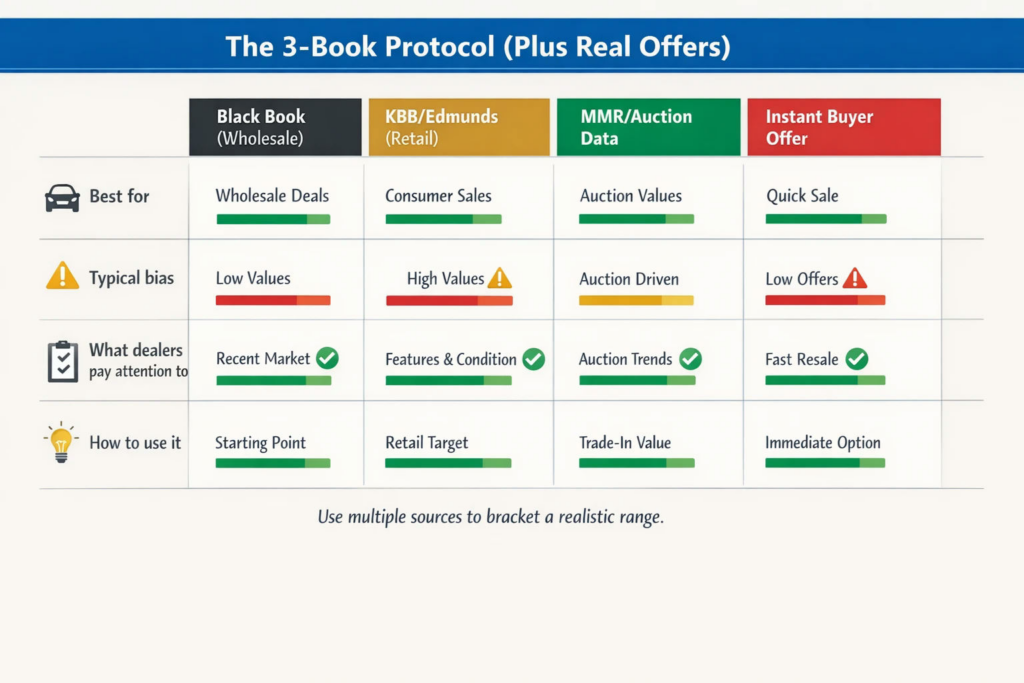
Use these sources as a bracket: consumer retail tools to anchor, auction/wholesale data to reality-check, and real offers to set a floor.
The three “books” protocol for lease valuation
Dealers don’t rely on a single source, and neither should you. They look at multiple data points to determine what they can sell a car for and how little they can pay to acquire it. By understanding their playbook, you can anticipate their strategy and anchor the negotiation in your favor.
1. Consumer guides: Your public starting point (KBB & Edmunds)
Kelley Blue Book (KBB) and Edmunds are the consumer-facing tools everyone knows. They provide a “Private Party” or “Dealer Retail” value based on consumer-reported sales data.
- How to use it: Generate a value for your vehicle in “Good” or “Very Good” condition. This number serves as your high anchor. It represents what a buyer might pay on a dealer’s lot after the car has been reconditioned and marked up. It is not what a dealer will offer you, but it’s a critical reference point for the negotiation.
- The catch: Dealers often dismiss KBB values as inflated. Your job isn’t to argue that the KBB price is the “real” price, but to use it to frame the conversation around your car’s excellent condition and market desirability.
2. Wholesale data: The dealer’s secret weapon (Black Book & MMR)
This is the data dealers actually use. Black Book and Manheim Market Report (MMR) are based on real-time auction results from wholesale markets where dealers buy and sell inventory. This is the truest reflection of a vehicle’s wholesale value.
- How to use it: While direct consumer access can be limited, you can ask a dealer for the “Black Book” or “MMR” printout for your vehicle. Better yet, services that facilitate buyouts often have access to this data and can provide it. This number represents the dealer’s likely cost to acquire a similar car at auction.
- The advantage: When a dealer offers you a price far below KBB, showing you have wholesale data proves you’ve done your homework. It shifts the discussion from a vague “market value” to a concrete “auction value,” making it much harder for them to lowball you.
3. Instant cash offers: The real-world floor (CarMax & Carvana)
Instant offer sites provide a firm, 7-day price for your vehicle. In a normal market, this is your floor price; you know you can get at least this amount. However, for many lessees in 2026, this has become more complicated.
- How to use it: Get quotes from one or two major online buyers. This gives you a tangible, real-world offer. Even if you can’t sell to them directly, it’s a powerful piece of evidence to bring to the dealership.
- The critical warning: Many auto manufacturers now ban third-party dealers (like CarMax) from buying out their leases. A fantastic quote from an online retailer is useless if your leasing company (like Honda Financial or GM Financial) won’t let them buy the car. We’ll cover how to handle this next.
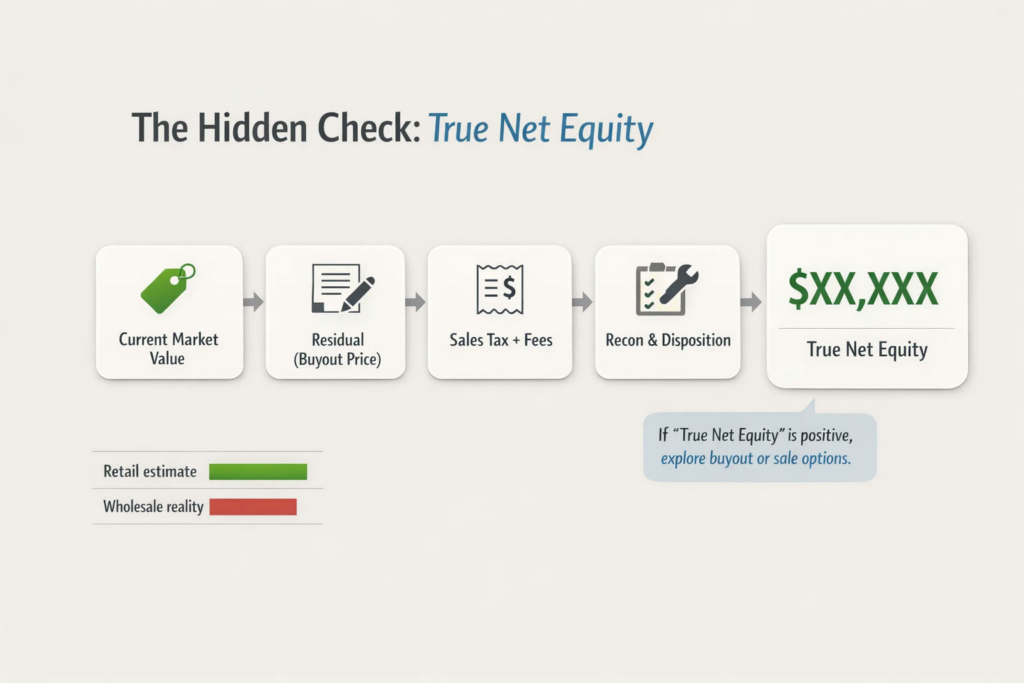
A defensible valuation isn’t just a number—it’s a script and evidence. Use these counters to keep fees, recon, and ‘no equity’ claims honest.
Calculating your true net equity
Once you have a realistic market value range, you can calculate your net equity. This is the actual cash you stand to gain, and it’s more than just market value minus your residual value.
True Net Equity = Market Value – (Residual Value + State Sales Tax + Disposition Fee + All Other Fees)
Forgetting to include sales tax is the most common and costly mistake people make. If your residual is $20,000 and your state has 7% sales tax, you must account for the $1,400 it will cost to buy the car before you can access its equity.
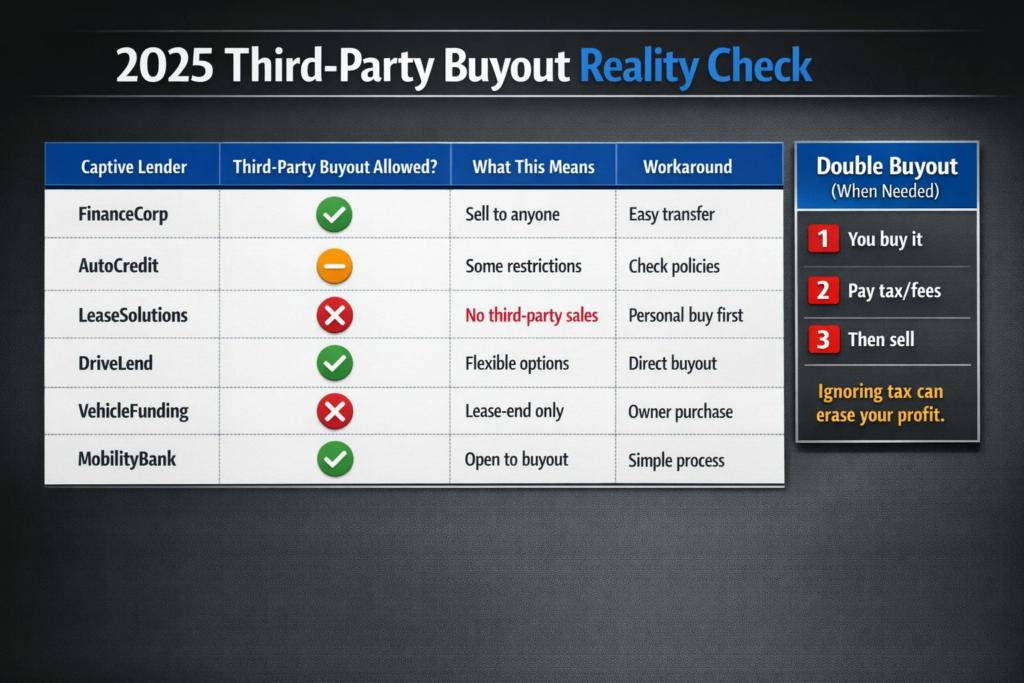
Don’t stop at market value minus residual. Add taxes, fees, and end-of-lease costs to reveal the number that actually drives your decision.
This calculation reveals why many people are choosing to buy their leased vehicles, even if they don’t plan to keep them long-term. With average lease buyout loan terms now extending to 72.2 months, buyers are treating this as a smart ownership move, locking in a car they know and trust at a price below the inflated used car market.
The roadblock: Third-party buyout restrictions
Many of the largest captive lenders, including those for Honda, Ford, GM, and Tesla, have effectively closed the loop on lease buyouts. They no longer permit third-party dealers to purchase the vehicle directly. This policy invalidates many instant cash offers and is the single biggest source of frustration for lessees.
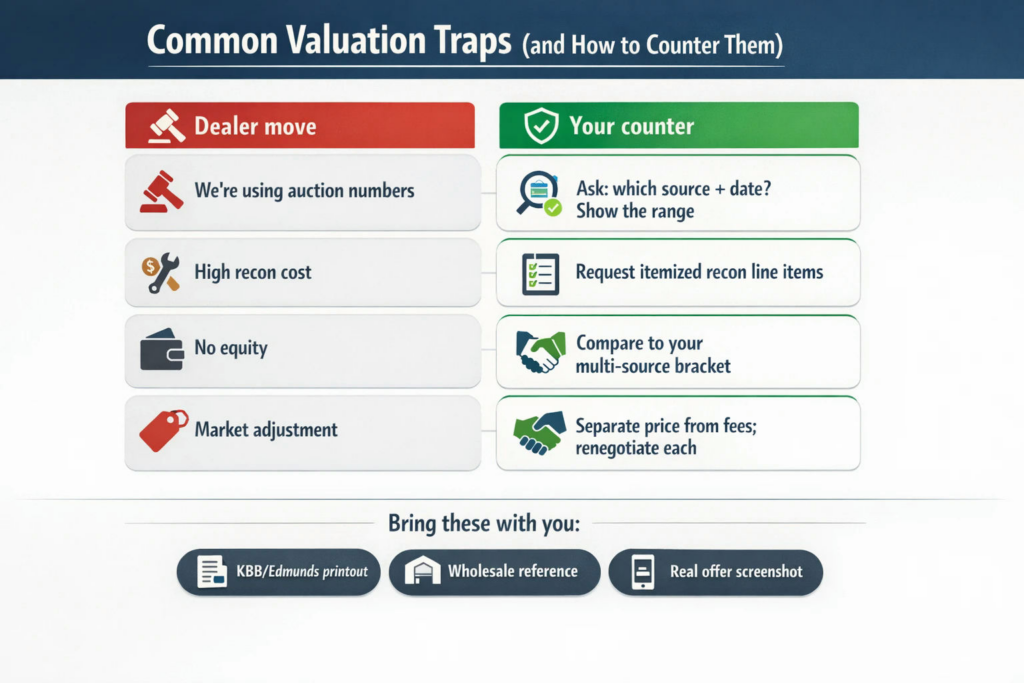
Before trusting any instant-offer quote, confirm your lender’s policy. If third-party buyouts are blocked, plan for the double-buyout costs first.
If your lender has this restriction, you have two primary paths to access your equity:
- Buy and Sell Yourself (The “Double Buyout”): You must first purchase the vehicle from the leasing company, pay the sales tax, and get the title in your name. Only then can you sell it to a third party. This adds time, complexity, and a significant tax cost that must be factored into your net equity calculation.
- Use a Facilitator Service: Companies that specialize in lease buyouts can often navigate these restrictions. They purchase the car on your behalf, handling the financing, titling, and registration paperwork in one streamlined process. This effectively bypasses the third-party ban and simplifies the path to ownership or sale.
Your next move is clear
Don’t walk away from your lease without doing the math. The market dynamics of the past few years have created a significant financial opportunity for anyone whose lease is ending now.
By using the three-books protocol to establish a strong valuation, calculating your true net equity, and understanding your lender’s specific rules, you can make a confident, informed decision. Whether you choose to buy your car to keep it or to capture its equity, the first step is knowing exactly what it’s worth.
If you’re ready to see how your vehicle’s value translates into a smart financial move, our team can help you navigate the process. At Lease Maturity Services, we handle everything from securing competitive financing to managing all the titling and registration paperwork, ensuring you unlock every dollar of equity you’ve earned.
