
Lease wear and tear charges are one of the most common and misunderstood costs drivers face at the end of a vehicle lease. While normal use is expected, damage that exceeds your leasing company’s standards can result in unexpected repair bills ranging from a few hundred to several thousand dollars.
The amount you pay depends on far more than a scratch or dent. Vehicle brand, lease agreement terms, inspection standards, repair costs, and even current used vehicle values all influence your final lease-end charges.
This guide explains how lease wear and tear charges are assessed, what inspectors look for, how luxury and mainstream brands differ, and when repairing, returning, or buying out your lease is the smarter financial decision.
How Lease Wear and Tear Charges Are Calculated
Most leasing companies follow published wear and use guidelines that define what qualifies as normal versus excessive wear. During the lease-end inspection, trained inspectors evaluate the vehicle’s exterior, interior, wheels, tires, glass, mechanical condition, and missing equipment. Each issue is assigned an estimated reconditioning cost based on the leasing company’s repair standards rather than the actual repair cost you might pay at an independent shop.
Charges are typically influenced by repair complexity, replacement parts, labor rates, and manufacturer-specific standards. Luxury brands often require OEM components and higher-quality cosmetic repairs, increasing the overall cost of lease-end damage.
What inspectors consider “excessive” wear and tear
Lease agreements distinguish between “normal” and “excessive” wear. Normal wear includes minor scuffs or tiny paint chips from daily driving. Excessive wear is damage that requires reconditioning beyond a simple clean-up.
While every lease company has its own standards, inspectors often use common rules of thumb for a quick assessment.
The Credit Card Rule: if a scratch or scuff on the body panel is small enough to be completely covered by a standard credit card, it’s often considered normal wear. If it’s longer, it will likely be flagged.
The Quarter Rule for Dents: most dents smaller than the diameter of a quarter may be acceptable, especially if the paint isn’t broken. Larger dents are almost always chargeable.
The Tire Tread Test: tires are a major focus. The universal trigger for a full replacement charge is tread depth falling below 4/32 of an inch. For luxury vehicles with run-flat tires, this charge can easily exceed $1,200 for a full set.
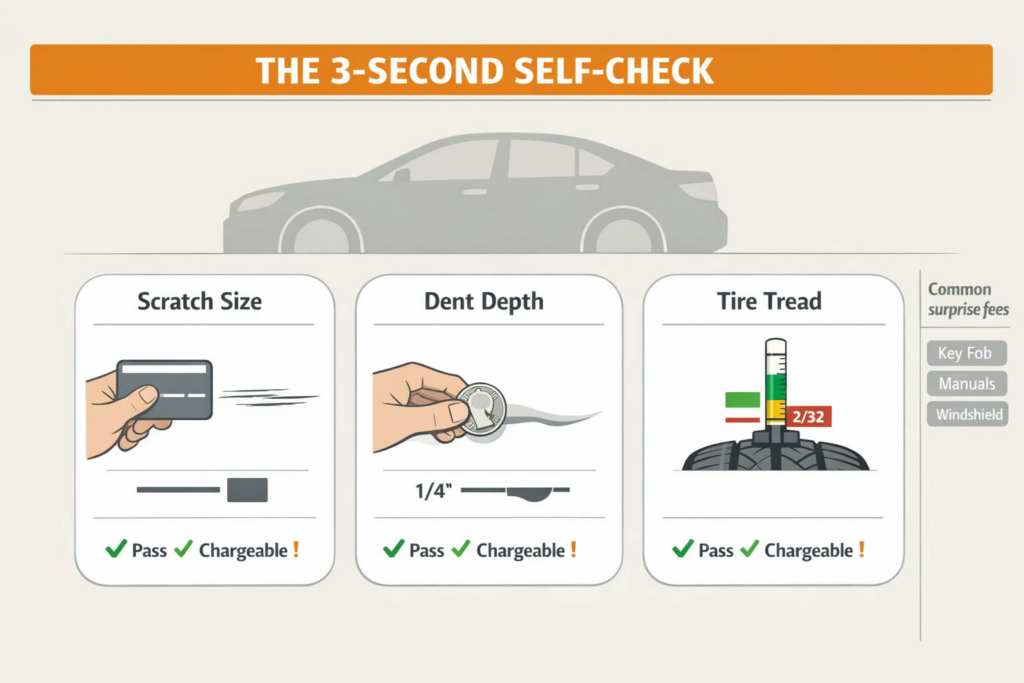
Beyond these common checks, inspectors scrutinize windshield chips, interior stains or tears, curb rash on wheels, and missing equipment. Items like a lost key fob or owner’s manual can trigger fees of over $400, but are often replaceable for a fraction of that cost beforehand.
Common Lease-End Charges Beyond Vehicle Damage
Many drivers focus only on scratches and dents, but lease-end invoices often include additional fees unrelated to cosmetic damage. Depending on your lease agreement, you may also encounter:
- Disposition fees
- Excess mileage charges
- Missing accessories or spare keys
- Administrative processing fees
- Outstanding registration or parking violations
Understanding the complete cost of ending a lease helps prevent unexpected expenses when comparing your available options.
The brand penalty: how charges differ for luxury vs. volume cars
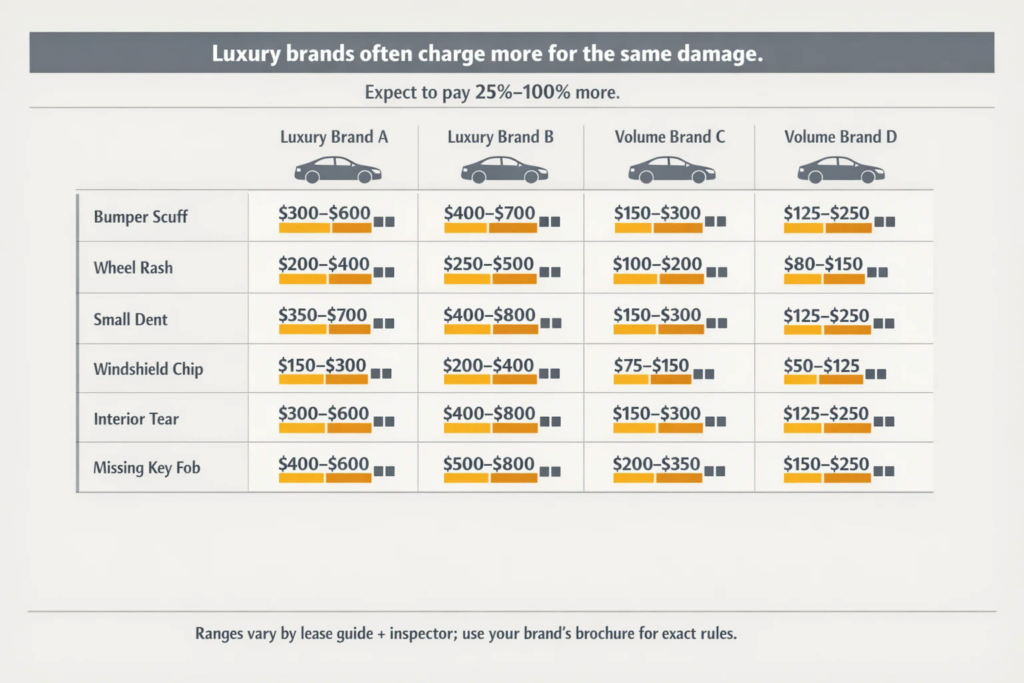
Not all inspection reports are created equal. The make of your vehicle heavily influences the final bill. As noted, luxury brands like Audi, BMW, and Mercedes-Benz typically charge between 25% and 100% more for the same damage compared to volume brands like Honda or Toyota.
Why the difference? Stricter standards on things like clear-coat finishes and alloy wheel condition mean that what passes on one car is a chargeable offense on another. This subjectivity is where drivers lose control: an inspector’s opinion on the severity of a wheel scuff can be the difference between a $50 note and a $250 charge.
When Repairing Damage Makes Financial Sense
Not every repair should be completed before returning a leased vehicle. The decision depends on comparing independent repair costs with the leasing company’s estimated damage charges. Small cosmetic issues, such as paintless dent removal or wheel refinishing, are often less expensive to repair independently. However, major body repairs may exceed the expected lease-end charge, making pre-repair less economical.
Obtaining multiple repair estimates allows you to compare actual costs before making a decision.
The math of mitigation: repair, return, or buy out?
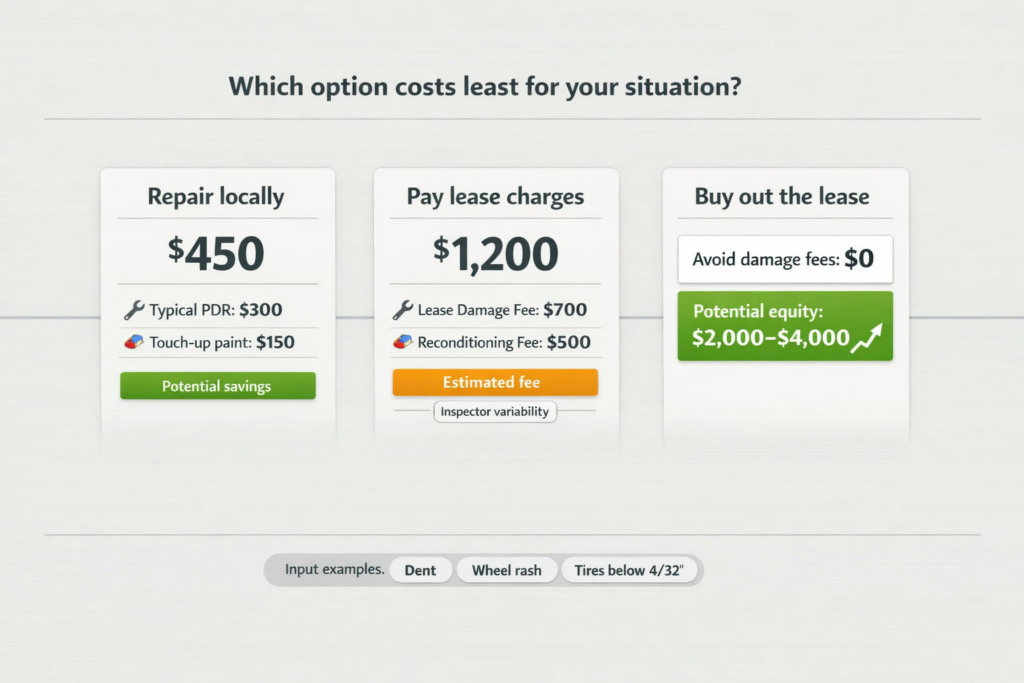
Faced with potential damage fees, you have three primary paths. The right choice depends on a simple cost-benefit analysis.
Pre-Return Repair: you can have the damage fixed by an independent shop before the inspection. A paintless dent removal (PDR) specialist might charge $75 to fix a ding that the lease company would bill for $200. This can be cost-effective for minor, isolated issues.
Pay the Fees: for very small issues, simply paying the charge at lease-end may be cheaper and less hassle than coordinating a repair. This is a gamble on the inspector’s final assessment.
Buy Out the Lease: purchasing your vehicle at the predetermined price completely removes the wear and tear inspection from the equation. You cannot be charged for damage on a car you are buying.
The financial logic has shifted in recent years. Since 2023, high used car values mean many leased vehicles are worth more than their buyout price. This positive equity, often between $2,000 and $4,000, creates a powerful arbitrage opportunity — your equity is simply the gap between your car’s residual value and what it’s actually worth on the used market. By choosing a buyout, you can often erase over $1,000 in potential damage fees and capture thousands in equity. Our free lease buyout calculator can estimate your monthly payment in seconds so you can compare it directly against your car’s current market value.
Factors to Consider Before Choosing a Lease Buyout
While a lease buyout can eliminate wear and tear charges, it isn’t always the best financial choice. Before purchasing your leased vehicle, evaluate its current market value, remaining warranty coverage, maintenance history, expected repair costs, financing rates, insurance premiums, and long-term reliability.
Comparing these factors alongside your lease-end fees provides a more complete financial picture than focusing solely on cosmetic damage.
The ultimate shield: how a buyout eliminates wear and tear fees
The lease buyout is more than just an option to keep a car you like. It is the only strategy that gives you 100% certainty and control over end-of-lease costs.
When you buy your leased vehicle, the final inspection becomes irrelevant. The dings, scratches, and worn tires are no longer liabilities subject to an inspector’s judgment. They are simply characteristics of a car you now own. This makes the buyout a powerful financial shield, especially in these situations:
Multiple Chargeable Issues: if you have damage in several areas (e.g., a scratched bumper, curbed wheels, and worn tires), the combined charges can quickly escalate. A buyout nullifies all of them at once.
High Positive Equity: if your car’s market value is significantly higher than your buyout price, purchasing it is a smart financial move regardless of its condition. Our lease buyout score tool weighs your equity alongside reliability, replacement cost, and mileage to tell you exactly how strong that move is.
Avoiding Subjective Fees: a buyout lets you sidestep the risk of an overly strict inspector or inflated repair estimates from the leasing company.
Can Lease Wear and Tear Charges Be Negotiated?
In some situations, yes. Although many leasing companies rely on standardized inspection reports, customers may dispute inaccurate assessments or provide documentation showing that repairs were completed before vehicle return. Some manufacturers also offer lease loyalty programs that waive certain charges when leasing or purchasing another vehicle from the same brand.
Your 90-day plan to minimize lease-end costs
Don’t wait until the week before your lease ends. A proactive approach in the final three months will put you in the strongest possible position.
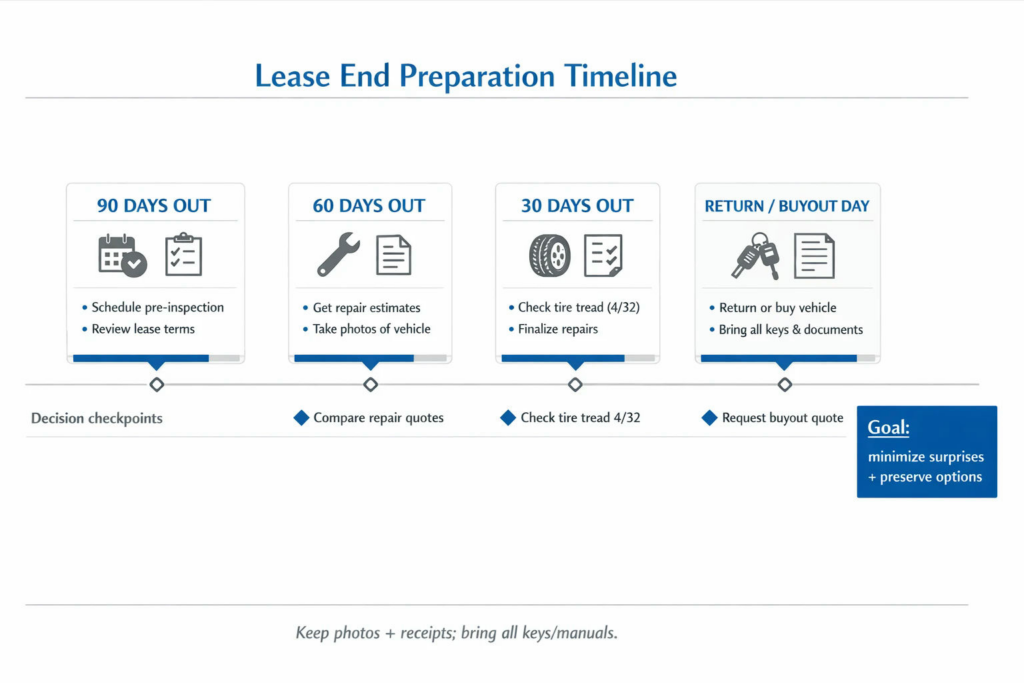
90 Days Out — Get a Pre-Inspection: many leasing companies offer a complimentary pre-inspection. This gives you a no-obligation report detailing every potential charge. This document is your roadmap.
60 Days Out — Gather Your Data: with the pre-inspection report in hand, get quotes from local, reputable shops for any flagged repairs. Simultaneously, confirm your vehicle’s buyout price and research its current market value.
30 Days Out — Make Your Decision: compare the costs. Is it cheaper to repair the items, pay the estimated fees, or execute a buyout? If the math points toward a buyout, this is the time to arrange financing and start the process.
By turning the lease-end process into a structured financial decision, you replace anxiety with authority. If a buyout is your most strategic move, our team can help manage the entire process, from securing financing to handling all the title and registration paperwork.
Take control of your lease end. Get started with Lease Maturity Services today to see how we can simplify the process and help you avoid unnecessary fees.
