
Facing the end of your car lease often brings a sense of uncertainty. The primary source of this anxiety is the final inspection, a process where small scratches and worn tires can translate into a bill ranging from $1,500 to over $4,000. Many drivers feel they are at the mercy of the leasing company, but you have more control than you think. Understanding what inspectors look for is the first step. Knowing how to bypass the inspection entirely is the ultimate solution.
As you enter the 60-day window before your lease ends, the clock starts ticking on preparing for this final assessment. Let’s break down the process so you can make a clear-headed financial decision instead of a last-minute emotional one.
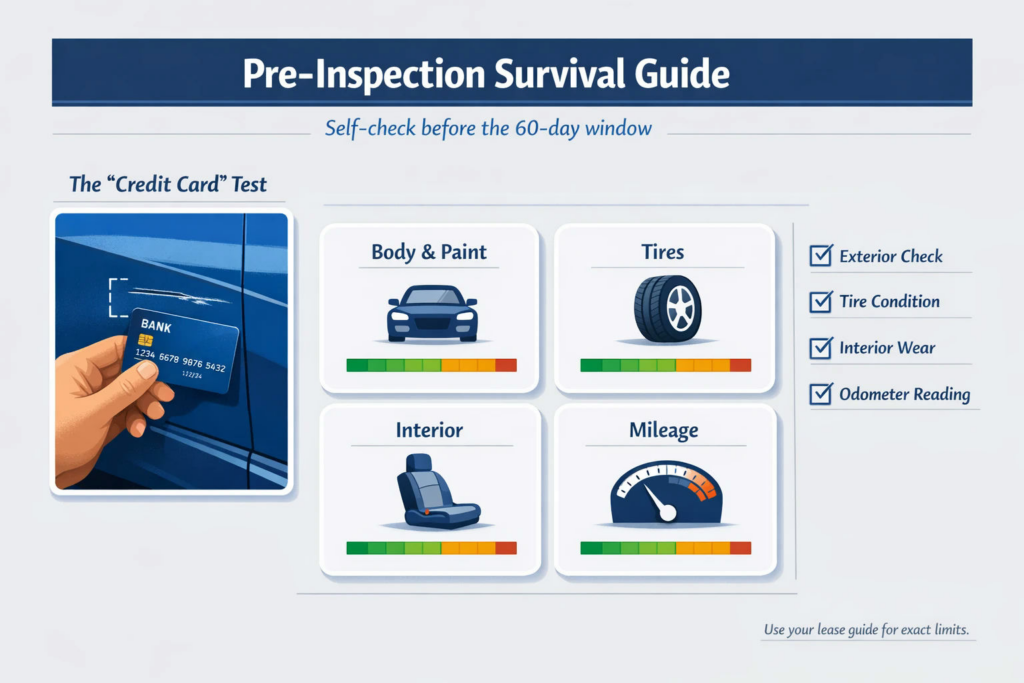
Use this quick self-check to spot issues before the inspection window. If multiple items land in “risk,” you’ll want to price repairs—or consider a buyout exit.
What inspectors are trained to see
Leasing companies like Ally Financial typically hire independent, third-party inspectors from firms like AutoVIN. These inspectors are not there to be lenient; they follow a strict, standardized checklist designed to protect the lender’s asset. They work from a rulebook, not emotion, which means you can learn the rules of the game.
Most assessments are built around three core areas:
1. Tires and wheels
This is one of the most common and costly charge categories. Inspectors check for two main things:
- Tread Depth: The industry standard requires tire tread to be at or above 4/32 of an inch. Anything less is typically flagged for replacement, and you’ll be charged for a full set of new, comparable tires.
- Scuffs and Gouges: Wheels with significant curb rash or deep scratches will be noted. While minor scuffs might pass, damage that compromises the wheel’s integrity or appearance is an easy charge.
2. Exterior body and glass
Inspectors use simple tools to measure damage objectively. The most famous is the “Credit Card Test.” If a scratch is deep enough to catch a fingernail or a dent is larger than the size of a credit card, it’s usually considered excess wear.
- Dents and Dings: Multiple small dings (under 1 inch) on a single panel may be grouped together and charged as one larger repair.
- Scratches: Surface-level scuffs might be acceptable, but anything that has broken the paint is a clear-cut charge.
- Windshield: Any star, crack, or chip in the driver’s line of sight is an automatic flag. Even small chips elsewhere may be chargeable.
3. Interior condition
Inspectors are looking for permanent damage beyond normal daily use.
- Stains and Odors: Significant stains on upholstery or strong odors (like smoke) that require professional cleaning or replacement will be charged.
- Tears and Burns: Any rips, tears, or burns in the seats, headliner, or carpets are considered excessive damage.
- Missing Equipment: You must return the vehicle with all original items, including floor mats, spare tire, and both sets of keys.
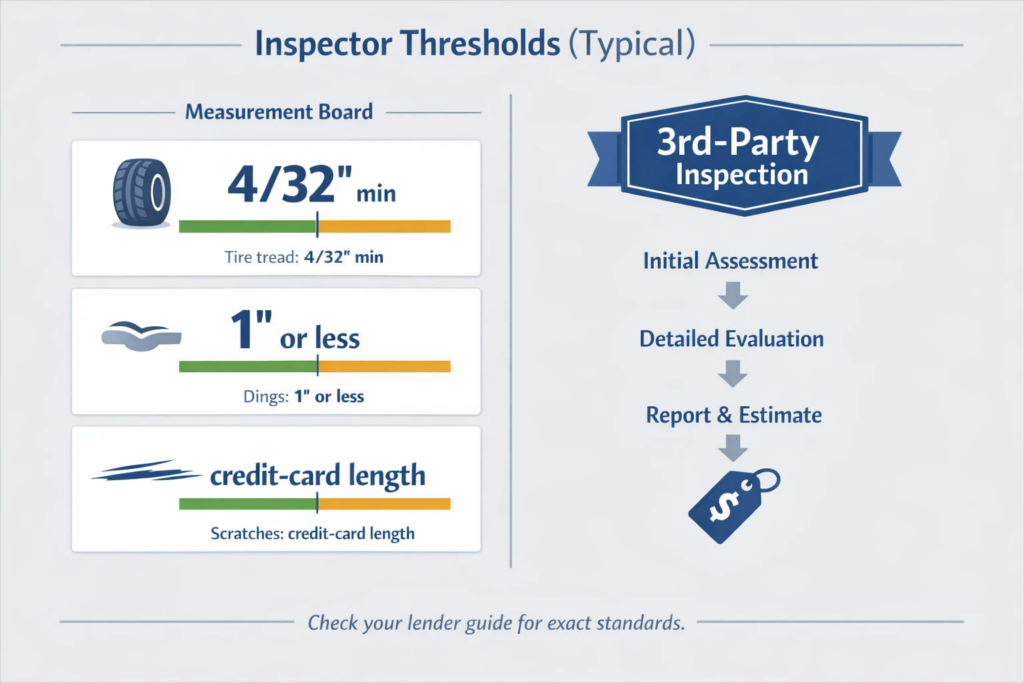
These are common cutoffs inspectors use to classify wear vs. excess. When you know the thresholds, you can predict charges and choose the smartest next step.
The hidden costs that surprise most drivers
The final inspection report isn’t the only source of end-of-lease charges. The biggest financial surprises often come from fees buried in your original contract that become due upon return.
A typical turn-in invoice might include:
- Excess Wear Charges: The total cost for repairing the items flagged by the inspector ($1,500+ is common).
- Mileage Penalties: Usually $0.15 to $0.25 for every mile you are over your allowance. At 5,000 miles over, that’s an extra $750 to $1,250.
- Disposition Fee: This is a purely administrative fee the lender charges to cover the costs of selling or auctioning the car. It averages between $350 and $500 and is charged even if your car is in perfect condition. Policies on this fee vary significantly — our manufacturer-specific resource guide explains which lenders waive it and under what circumstances.
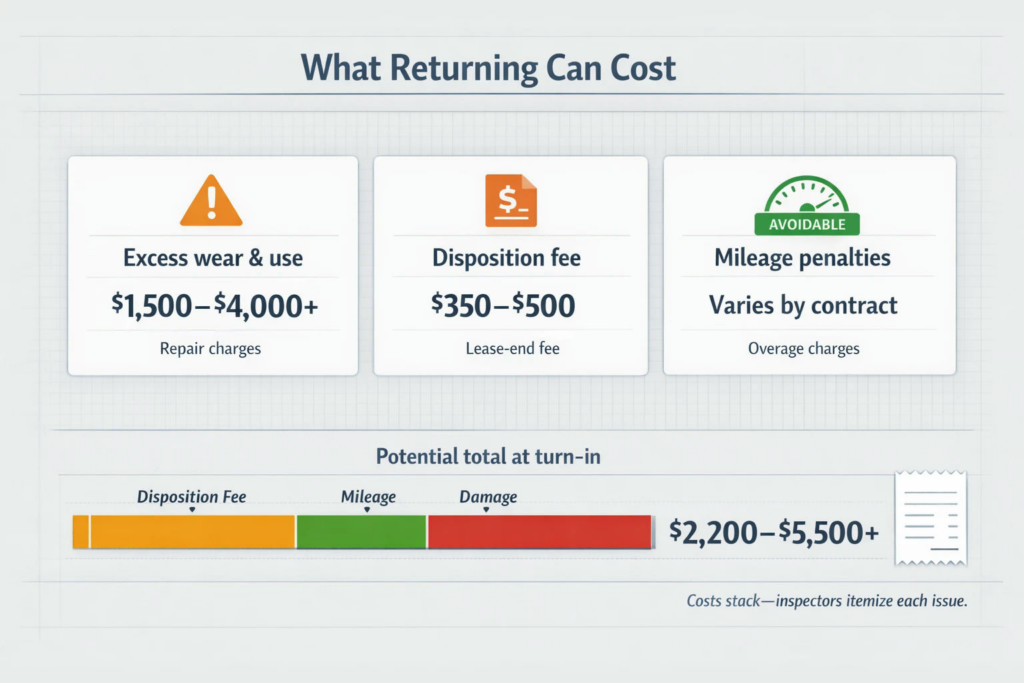
Most surprises come from stacked fees, not one big charge. Seeing the full range helps you compare: repair, return, or exit via buyout.
When you add these up, a driver might face a $3,000 bill just to walk away from a car they’ve cared for for years. This is where a strategic decision can save you thousands. You can use our free Lease Buyout Calculator to compare what you’d pay in return fees versus what a buyout would cost, side by side.
The buyout: Your escape from the inspection process
There is one path that makes all these concerns disappear: buying your leased vehicle. When you choose to purchase your car, you are legally bypassing the entire end-of-lease inspection process.
Here’s why it’s so effective:
- No Inspection Required: You buy the car “as-is.” There is no third-party inspector, no report, and no wear-and-tear debate.
- Zero Excess Wear Fees: Those scratches, dings, and worn tires? They are now simply part of the car you own. You can choose to repair them on your own timeline and budget, or not at all.
- No Mileage Penalties: All mileage overages are instantly forgiven because you are not returning the vehicle.
- No Disposition Fee: The $350-$500 disposition fee is completely waived.
Instead of paying thousands in fees and ending up with no vehicle, you can direct that money toward equity in an asset. With the help of a specialist like Lease Maturity Services, securing lease buyout financing options is often more straightforward than people assume. We handle the transaction with your leasing company, manage the titling and registration paperwork, and present you with competitive loan options from our network of trusted lenders.
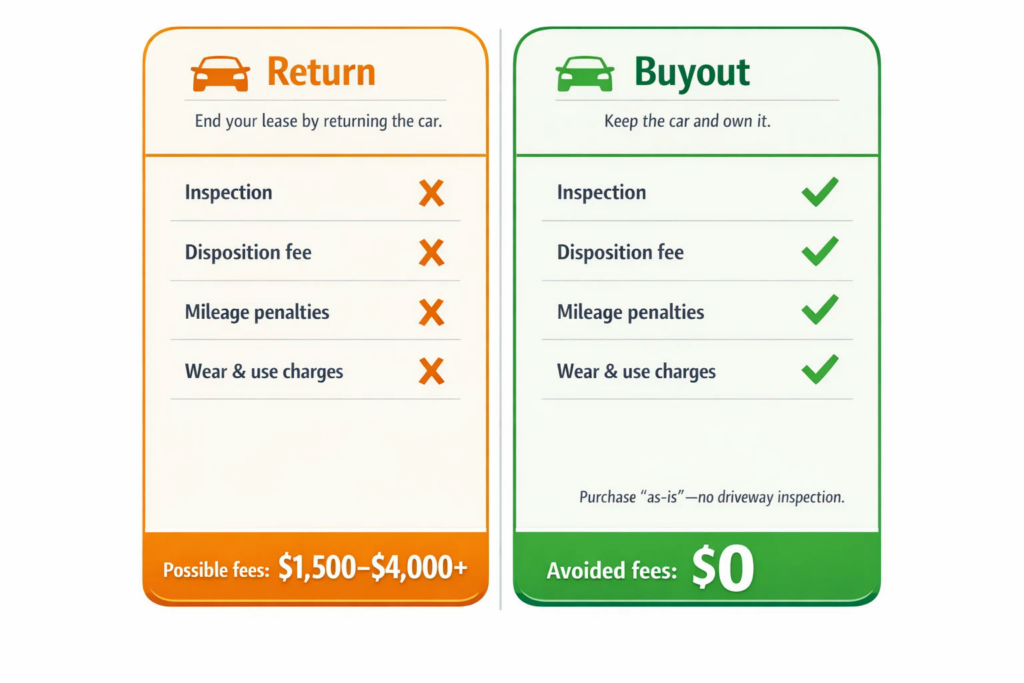
If your likely turn-in charges are high, a buyout can be the cleanest exit: skip inspection-driven fees and keep the car you already know.
Make the decision that’s right for you
If your pre-inspection shows minimal wear, you’re under your mileage cap, and you’re ready for a new vehicle, returning your lease can be a perfectly fine option.
But if you’re facing a combination of worn tires, a few noticeable scratches, and a mileage overage, the math changes quickly. Before you spend $1,000 on new tires just to give the car back, consider if a buyout is the smarter financial move. The process is simpler than you think and puts you in control.
At Lease Maturity Services, we specialize exclusively in this transition. We’ve helped over 60,000 drivers navigate this exact decision point — you can learn more about our team and track record to understand why so many drivers trust us with this process. If you want to understand your options and see how a buyout could eliminate inspection fees for good, learn how our lease buyout process works or contact us for a clear, no-obligation breakdown of your specific situation.
