
The gap between your leased vehicle’s residual value and its current market price represents a significant financial opportunity. For popular ICE SUVs like the Honda CR-V or Toyota RAV4, this positive lease equity can range from $5,500 to $7,900 in today’s market. In contrast, many electric vehicles are depreciating faster than predicted, often resulting in negative equity. This volatility makes extracting your equity a high-stakes decision that demands a clear strategy, not just a simple calculation.
Before you can turn that paper equity into cash, you need a realistic plan that accounts for manufacturer restrictions, hidden taxes, and the administrative work involved.
What Is Lease Equity?
Lease equity is the difference between your leased vehicle’s current market value and the amount required to purchase it from the leasing company, commonly referred to as the lease buyout price or payoff amount.
When your vehicle is worth more than the buyout amount, you have positive lease equity. This means there is potential value that can be converted into cash through a lease buyout and resale. Conversely, if the vehicle’s market value falls below the payoff amount, you have negative lease equity, making a buyout less financially attractive.
Understanding lease equity allows you to evaluate whether selling the vehicle, purchasing it, or simply returning it at lease end provides the greatest financial benefit. Rather than focusing only on monthly payments, lease equity considers the vehicle’s actual market position at the time of your decision.
First, run an equity reality check
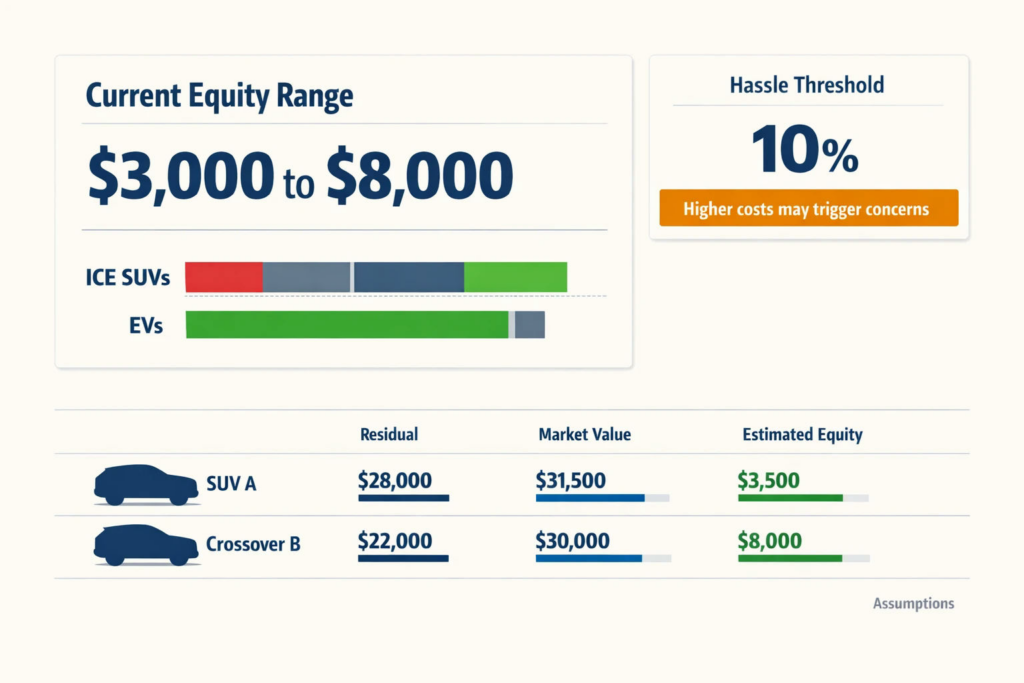
Lease equity is the difference between your vehicle’s buyout price (the residual value plus any remaining fees) and its current fair market value. If the market value is higher, you have positive equity. But not all equity is worth pursuing.
Community analysis suggests a common “hassle threshold”: if your potential equity is less than $2,000, the overhead of taxes, registration fees, and title processing times may not be worth the effort. For many popular models, the equity is substantial. However, the rapid depreciation of some EVs, based on 2025 market data from Cox Automotive, means lessees could owe more than the car is worth, making a simple lease return the smarter choice. The first step is to know exactly where you stand.
How Lease Equity Is Calculated
Many drivers assume lease equity is simply the difference between the vehicle’s value and the residual amount listed in the lease contract. In reality, the calculation should include every cost required to complete the transaction.
A more accurate lease equity calculation follows this formula:
Current Market Value
− Lease Buyout Price
− Sales Tax
− Title and Registration Fees
− Financing Costs (if applicable)
= Estimated Net Lease Equity
Using net lease equity rather than gross equity provides a more realistic picture of how much money you can actually receive after completing a lease buyout and resale.
Positive vs. Negative Lease Equity
Not every leased vehicle builds equity in the same way. Market demand, depreciation, mileage, and manufacturer pricing strategies all influence whether a vehicle gains or loses value during the lease term.
Positive lease equity generally occurs when used vehicle demand exceeds expectations, allowing the vehicle’s market value to rise above its predetermined residual value. This has been common among many SUVs, trucks, and certain fuel-efficient vehicles in recent years.
Negative lease equity develops when depreciation outpaces expectations. Many electric vehicles have experienced accelerated depreciation due to changing incentives, increased inventory, and evolving technology, making lease returns more financially attractive than purchasing the vehicle outright.
Understanding whether your lease has positive or negative equity should be your first decision point before exploring financing, resale options, or third-party buyers.
The biggest roadblock: manufacturer restrictions
Before you start shopping for offers, you need to answer one critical question: does your leasing company even allow a third-party buyout? In an effort to control their used car inventory, approximately 60% of captive lenders now restrict who can purchase your leased vehicle.
Automakers like Ford, GM, and Honda often require the original lessee to purchase the vehicle first or mandate that it be sold directly to one of their franchised dealers. This completely changes the process for cashing out your equity. Calling your lender and asking “Can a third party purchase my leased vehicle?” should be your first action. Their answer determines your next steps and prevents you from wasting time on a path that isn’t available.
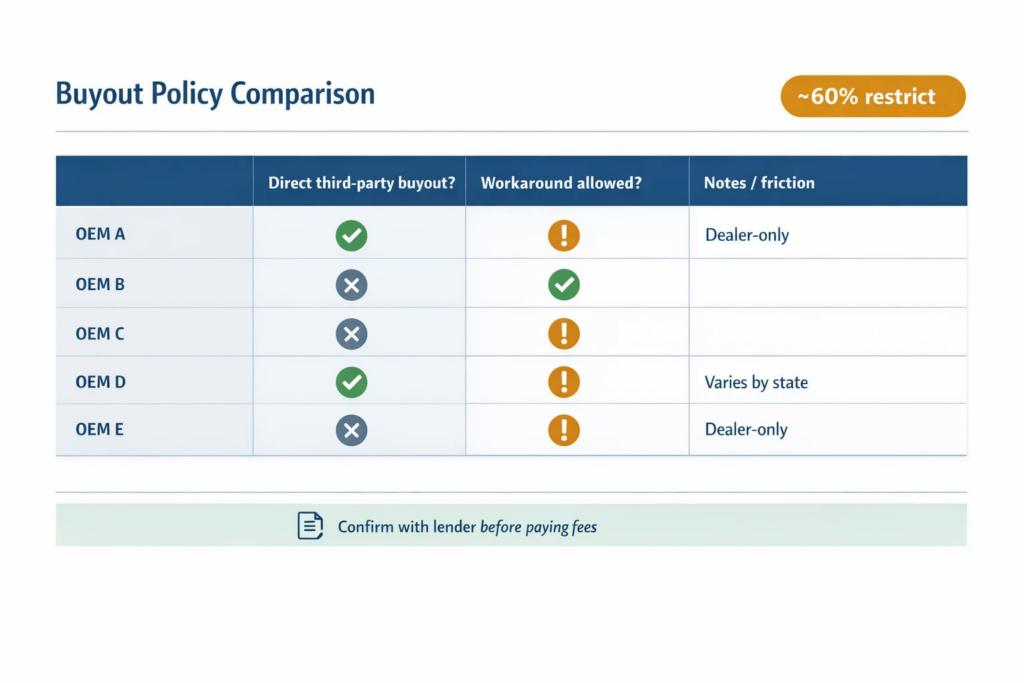
This is a critical step in any vehicle lease buyout process, and getting a clear answer upfront saves significant headaches later.
Understanding Third-Party Lease Buyout Restrictions
Third-party lease buyout restrictions determine whether an outside buyer, dealership, or lease buyout company can purchase your leased vehicle directly from the leasing company. Some lenders freely permit these transactions, while others restrict purchases to the original lessee or authorized franchise dealerships.
Restrictions vary between lenders and may change over time. Understanding your leasing company’s current policy helps you avoid pursuing offers that ultimately cannot be completed. It also influences whether you should pursue a direct third-party sale, a personal buyout followed by resale, or assistance from a lease buyout specialist.
Understanding the real math: why equity isn’t profit
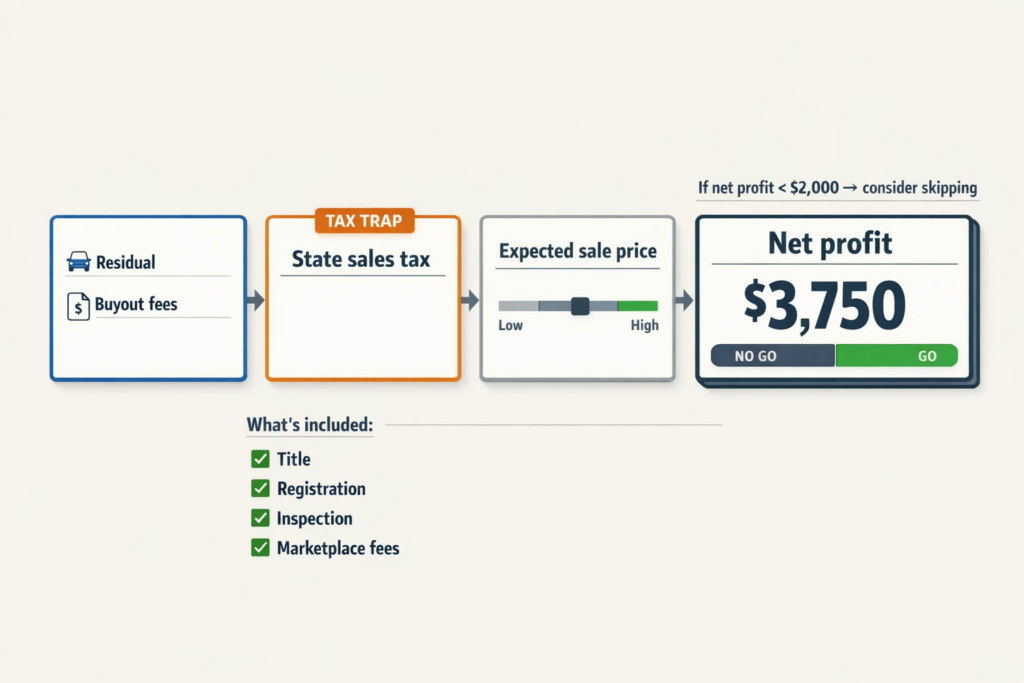
A common and costly mistake is confusing equity with net profit. When you buy your leased vehicle, you are typically required to pay sales tax on the buyout price. If you then sell the car to a private party, your profit margin is immediately reduced by the amount of tax you paid.
Consider this breakdown:
- Market Value: $30,000
- Lease Buyout Price: $24,000
- Initial Equity: $6,000
Now, let’s factor in an 8% sales tax on the buyout price, which comes to $1,920.
- Your Net Profit: $6,000 (Equity) – $1,920 (Sales Tax) = $4,080
This “tax trap” can erase a third of your expected profit before you even account for registration, title, and other minor fees. Calculating your net profit is essential for deciding whether a buyout-and-resell strategy makes financial sense.
Working with a dedicated lease buyout partner can sometimes mitigate these tax issues, as the transaction can be structured differently. Securing the right lease buyout financing is also a key factor in managing your total out-of-pocket costs.
Hidden Costs That Reduce Lease Equity
Many lessees focus solely on the difference between market value and their lease payoff without considering the expenses that reduce their actual proceeds. These additional costs can significantly impact your final lease equity, especially when margins are relatively small.
Common expenses include sales tax, title transfer fees, vehicle registration, documentation charges, financing interest, temporary insurance adjustments, and state-specific processing fees. While each expense may appear modest individually, together they can reduce your overall return by several thousand dollars.
Evaluating these costs before initiating a lease buyout allows you to determine whether your positive lease equity remains financially worthwhile after all required expenses have been deducted.
When Selling Is Better Than Returning Your Lease
Returning a leased vehicle is not always the most profitable option. If your vehicle has accumulated significant positive lease equity, purchasing and reselling it may generate substantially greater financial value than simply surrendering the vehicle at lease end.
However, lease returns may remain the better choice when negative equity exists, third-party buyout restrictions prevent resale opportunities, excessive taxes eliminate most of the available profit, or rapid depreciation continues to reduce market value.
Comparing both options before your lease expires helps you maximize financial outcomes while avoiding unnecessary costs associated with an unplanned lease return.
How to increase your vehicle’s valuation
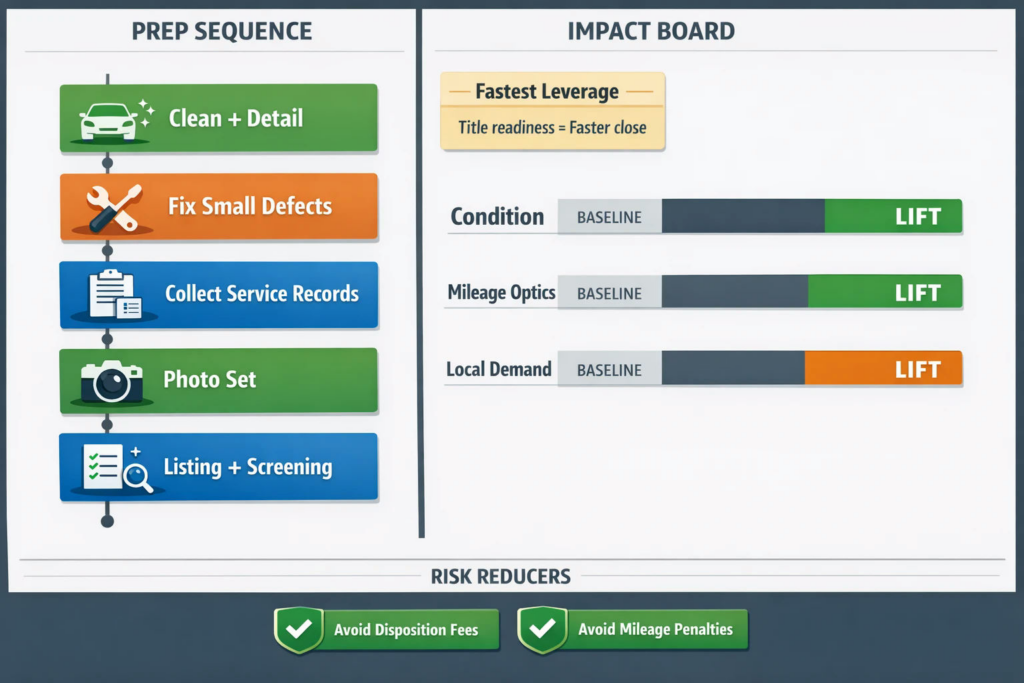
Once you’ve confirmed you have sufficient net equity and your lender permits a third-party sale, the focus shifts to maximizing your selling price. While you can’t change the mileage, you can influence a buyer’s perception of value.
Focus on the highest-impact preparations:
- Professional Detailing: A truly clean car, inside and out, is the single best investment. It signals that the vehicle has been well-maintained.
- Gather Service Records: A complete maintenance history builds buyer confidence and can justify a higher asking price.
- Address Minor Cosmetics: Small, inexpensive fixes like paintless dent removal or touching up rim scuffs can yield a significant return.
- Prepare All Paperwork: Having the lease agreement, maintenance receipts, and vehicle information organized shows you are a serious and prepared seller. The biggest bottleneck in a private sale is often waiting for a clean title, so having everything else ready removes friction.
How Lease Buyout Financing Affects Profit
Lease buyout financing directly affects your overall lease equity because interest charges become part of your total acquisition cost. Even short-term financing used to complete a buyout should be included when calculating expected profit.
Some lessees secure temporary financing with the intention of selling the vehicle shortly after purchasing it, while others refinance the vehicle for long-term ownership. Comparing interest rates, loan terms, lender fees, and repayment flexibility helps minimize financing expenses while preserving more of your lease equity.
Obtaining financing approval before beginning the buyout process can also reduce transaction delays, particularly when market conditions change rapidly or lender payoff quotes have expiration dates.
Private Sale vs. Dealer Sale
Once you own the vehicle, several resale options become available. Each offers different trade-offs involving convenience, selling price, paperwork, and transaction speed.
Private-party sales frequently generate the highest selling prices because individual buyers are often willing to pay closer to retail market value. However, they require more effort, including advertising, buyer communication, inspections, payment verification, and title transfer.
Selling to a dealership, CarMax, Carvana, or another vehicle retailer generally provides a faster transaction with fewer administrative responsibilities. While these buyers may offer slightly lower prices than private-party purchasers, the convenience and speed often offset part of the pricing difference.
Lease buyout specialists provide another alternative by coordinating lender payoff, title processing, financing, and documentation, allowing many lessees to complete the transaction with considerably less administrative work.
Your path to cashing out
If a third-party sale is your goal, you have two primary options for executing the transaction.
- The DIY Buyout-and-Resell: In this scenario, you secure financing, purchase the vehicle from the leasing company, pay sales tax, and wait for the DMV to issue the title in your name. This process can take several weeks, during which time your vehicle’s market value could change. You are responsible for all the paperwork and finding a private buyer.
- The Facilitated Buyout: A specialized service like Lease Maturity Services can act as an intermediary. We handle the purchase directly from your leasing company, satisfying their requirements. This streamlines the entire process, from managing the payoff and title transfer to finalizing the registration for you or your buyer. It removes the administrative burden and the risk of waiting for a title.
Common Lease Equity Mistakes
Several avoidable mistakes reduce the value of otherwise profitable lease buyout opportunities. One of the most common is assuming gross lease equity equals actual profit without accounting for taxes and transaction costs.
Other frequent mistakes include relying on a single vehicle valuation, failing to verify third-party buyout eligibility with the lender, overlooking payoff quote expiration dates, delaying the transaction while market values fluctuate, and underestimating title processing timelines.
Carefully reviewing each stage of the lease buyout process before committing to a transaction helps preserve more of your positive lease equity and minimizes costly surprises.
Turn your lease equity into cash without the hassle
Realizing the equity in your leased vehicle is an excellent financial move, but it requires navigating a complex process filled with potential pitfalls. From manufacturer restrictions to unexpected tax liabilities, going it alone can quickly become overwhelming.
At Lease Maturity Services, we specialize exclusively in vehicle lease buyouts. We manage the entire transaction, from securing competitive financing to handling all the title and registration paperwork. Our expertise ensures a smooth, transparent, and efficient process that lets you unlock your vehicle’s equity with confidence.
See how we can help you manage your lease buyout today.
When a Lease Buyout Specialist Makes Sense
While some lessees successfully complete a lease buyout independently, others benefit from professional assistance when manufacturer restrictions, financing requirements, or title processing create additional complexity.
A lease buyout specialist can help coordinate lender payoff requests, financing, title transfers, registration, document preparation, and communication between all parties involved. This reduces administrative delays while helping ensure the transaction progresses efficiently from lease payoff to final sale.
Professional assistance may be particularly valuable when dealing with restricted third-party buyouts, multi-state transactions, expiring payoff quotes, or situations where preserving positive lease equity depends on completing the transaction quickly.
