
While the car market has shifted, positive lease equity remains a significant asset for many drivers. Recent data from Cox Automotive shows that although average equity has decreased from a high of $5,178 to around $2,609, between 50% and 60% of leases ending this year are still worth more than their buyout price.
This isn’t just “found money.” It’s a strategic asset that requires a smart plan to access, especially as lenders introduce new rules to control the process. This guide provides a clear playbook for identifying and monetizing your equity, helping you navigate the options and avoid common pitfalls.
The equity audit: do you have cash in your car?
Before you can make a plan, you need to know what you’re working with. Run a quick lease equity audit to calculate your potential equity — it’s straightforward. You need two numbers: the vehicle’s current market value and the residual value from your lease contract.
Current Market Value – Residual Value = Your Lease Equity
The residual value (or buyout price) is fixed in your lease agreement. To find the current market value, you can get quotes from online buyers like Carvana or CarMax, check valuation tools like Kelley Blue Book, or get an offer from a local dealership. The difference between these two figures is the cash you have the opportunity to claim.
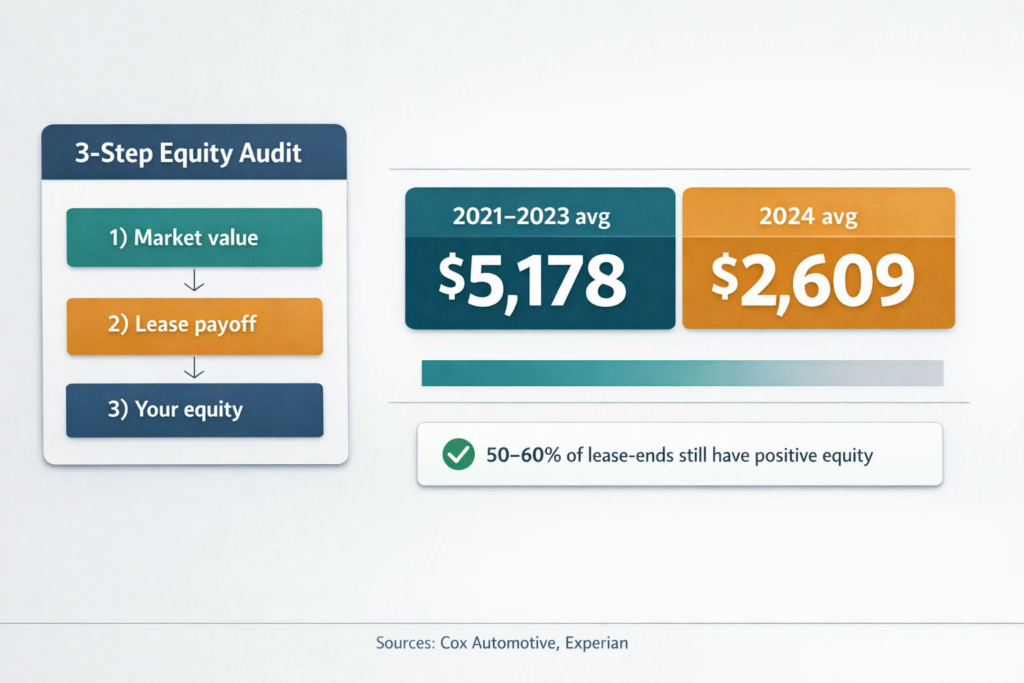
Use a quick equity audit to estimate cash value before choosing an exit path—average equity is lower than the peak, but many lease-ends still have money on the table.
The four pathways to monetize your lease equity
Once you’ve confirmed you have positive equity, you have several ways to turn it into cash. Each path offers a different balance of financial return, speed, and convenience. Understanding the tradeoffs is key to choosing the right strategy for your situation.
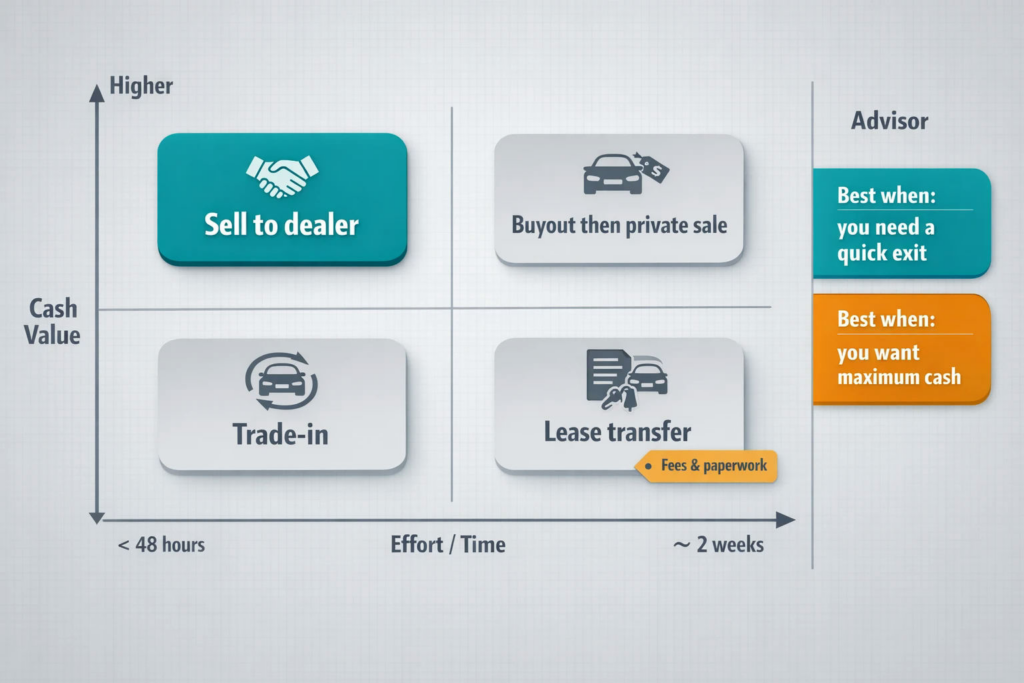
Pick the strategy that matches your timeline: fast exits often trade value for simplicity, while buyout-and-sell can maximize cash if you can handle paperwork.
Pathway 1: selling or trading in at the dealership
This is the most traditional option. You can either sell your leased car directly to the dealership you leased from or use the equity as a down payment on a new vehicle.
- Pros: It’s fast and simple. The dealership handles all the paperwork, and you can complete the entire transaction in one place.
- Cons: This convenience often comes at a cost. The dealer’s offer may be lower than what you could get from another buyer because they control the transaction.
Pathway 2: the buyout-and-sell strategy
This strategy involves purchasing the vehicle yourself and then selling it to a private party. It has the highest potential for financial return but also requires the most effort.
- Pros: You capture the vehicle’s full retail market value, maximizing the cash you receive from your equity.
- Cons: You’re responsible for everything. This includes securing financing for the buyout, managing the title transfer and registration, and then finding a buyer and handling the sale. For many, this administrative burden is a major barrier, which is why working with a specialist who can handle the entire lease buyout process is a valuable alternative.
Pathway 3: selling directly to a third party
Services like Carvana, CarMax, or other independent dealerships often provide competitive, no-haggle offers. For years, this was a popular and easy way to cash out equity. However, the landscape has changed dramatically.
- Pros: The process is typically quick, with online offers and straightforward paperwork. The offers are often higher than what a traditional dealership might provide.
- Cons: Many automotive brands now block these direct sales, creating a significant roadblock for lessees.
The lender wall: why your lease may not be for sale
If you’ve received a great offer from a third-party buyer only to be told the sale can’t happen, you’ve hit the “lender wall.” Many automotive finance companies, including major players like Honda, GM, and Ford, now prohibit lessees from selling their vehicle directly to a third party. They do this to keep high-quality used cars within their own dealer network.
This means that even if Carvana offers you $3,000 for your equity, your lender can refuse to sell them the car. Understanding which lenders restrict third-party buyouts — and what your workaround options are — is essential before you make any plans.
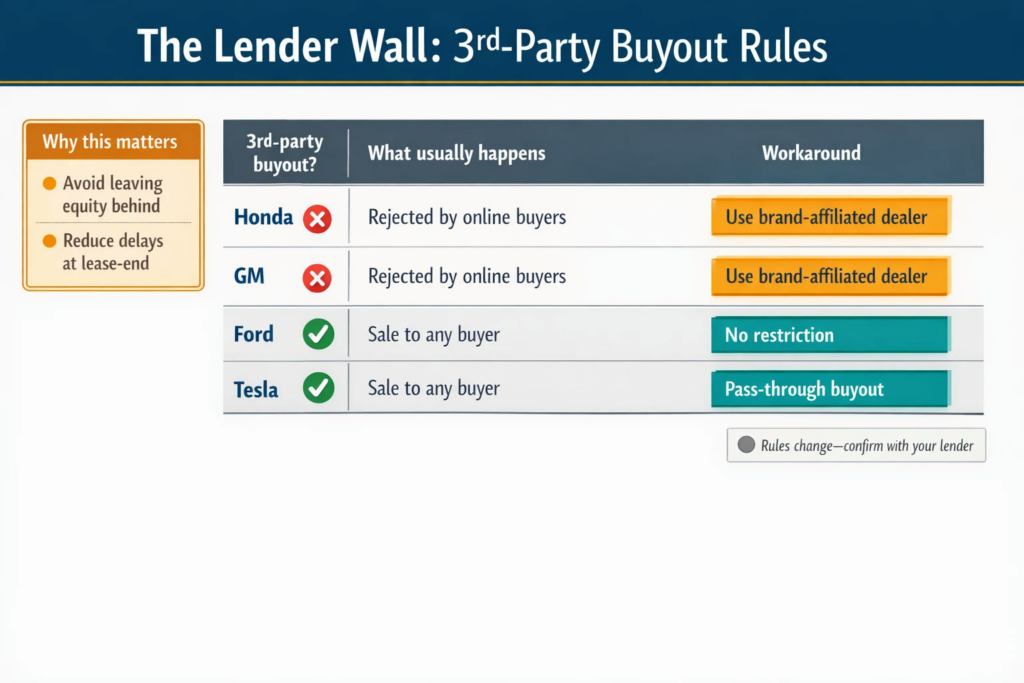
Before you plan a sale, verify lender rules—restrictions can block third-party buyers, but workarounds often exist that help you still capture your equity.
Lender buyout restrictions: a quick reference
| Lender / Brand | Allows Third-Party Buyouts? | Common Workaround |
|---|---|---|
| Honda/Acura Financial | No | Lessee must buy the car first |
| GM Financial | No | Lessee must buy the car first |
| Ford Credit | No | Lessee must buy the car first |
| Tesla | No | Lessee must buy the car first |
| Most Credit Unions | Yes | Direct sale is typically allowed |
| Toyota Financial | Yes | Direct sale is typically allowed |
Note: Policies change frequently. Always confirm your lender’s current rules directly.
The pass-through buyout: your strategic workaround
So how do you access the higher offer from a third-party buyer when your lender has restrictions? The solution is a pass-through buyout. You purchase the vehicle yourself first, and then you are free to sell it to anyone you choose.
This is the most effective way to bypass lender restrictions and get the best price for your vehicle. The key is to make the buyout process as smooth as possible. A specialized service can help you secure your buyout financing and manage the complex titling and registration paperwork, turning a complicated process into a simple, managed transaction.
Your equity as a legal shield: the California connection
For lessees in states like California, positive equity is more than just a financial opportunity; it’s a powerful form of protection. If you are unable to make lease payments and the vehicle is repossessed, California law allows the lender to sell it at a wholesale auction.
This creates an “auction trap.” Wholesale auction prices are typically 20-30% lower than retail value. If the car sells for less than your remaining lease balance, you could be left with a deficiency balance: a debt you still owe even after the car is gone.
By executing a lease buyout, you capture your equity and prevent the car from ever going to a low-value auction. This is the single most effective way to avoid a deficiency balance and protect your financial standing.
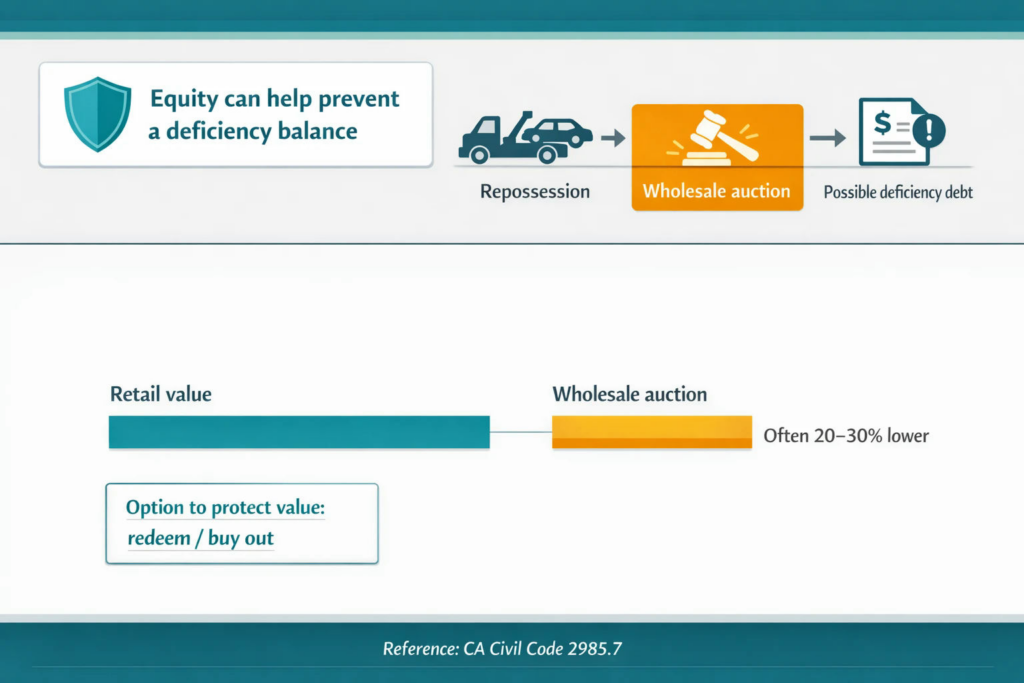
If you’re facing a forced exit, equity can be a protective asset—understanding the auction-value gap helps you choose options that reduce the risk of lingering debt.
Making your decision: value vs. effort
Choosing the right path depends on your priorities. Are you looking for maximum cash, maximum speed, or the least amount of hassle?
- For Maximum Simplicity: Selling back to the originating dealer is the easiest path but likely offers the lowest financial return.
- For Maximum Financial Return: A pass-through buyout followed by a sale to the highest bidder (private or third-party) will yield the most cash, but it requires managing logistics.
- A Balanced Approach: Using a dedicated lease buyout service to handle the financing and paperwork for a pass-through buyout gives you access to top-dollar offers without the administrative headache.
Your lease equity is a valuable asset waiting to be claimed. By understanding the rules, exploring your options, and using the right strategy, you can confidently turn that value into cash.
Ready to take control of your lease buyout? We specialize in simplifying the entire process, from securing competitive financing to handling all the DMV paperwork. Let us help you unlock the equity in your vehicle today.
